








A reliable restaurant shift handover process prevents the next team from starting service with partial information. When one shift ends and another begins, details can easily disappear: a late reservation, a table being held, a dish that is unavailable, or a customer concern that still needs a response. A quick conversation may help, but it is not enough when the restaurant is busy, several people are involved, or the team changes from day to day.
A useful handover turns those details into a short, repeatable routine. Its purpose is simple: the incoming team should understand the current service position, know what requires attention, and be clear about who will do what next. For independent restaurants operating more than one shift, this creates continuity without making the close of one service or the start of another unnecessarily complicated.
The best restaurant service handover is specific, current and action-focused. It does not attempt to repeat every event from the previous shift. Instead, it highlights the information that could affect the next service: reservations and table availability, menu changes, unresolved customer or operational issues, and assigned follow-up.
Set a consistent handover point

Start by deciding when the handover happens and who takes part. It might take place just before the outgoing lead leaves, when the incoming lead arrives, or during a brief overlap between shifts. The exact timing matters less than consistency. If the handover is treated as an optional chat that happens only when there is time, important information will be missed on the busiest days.
Keep the handover brief enough to be used every day, but structured enough to cover essential areas. A lead person can guide the review, while the rest of the team contributes details from their work. The incoming team should have an opportunity to ask questions and confirm what they have understood.
A handover is complete when the next team can begin service knowing the current situation, the exceptions and the next actions.
A shared operating view is more dependable than relying on memory, loose paper notes or messages spread across different conversations. The aim is not to create extra administration. It is to make the information already gathered during service easier to pass on.
1. Review remaining reservations and table availability
Reservations are the starting point because they shape the next team’s pace, seating plan and expectations. Review every booking that is still relevant to the upcoming service, including later arrivals, groups, changes and any guests currently waiting. The incoming team should understand not just how many covers are expected, but also which bookings require particular attention.
- Which reservations are still due to arrive?
- Have any bookings been changed, cancelled or added?
- Are there groups, timing constraints or other booking details the next team needs to see?
- Which tables are occupied, being cleared, unavailable or being held?
- Is there a waiting list or any expected walk-in pressure?
Table status is just as important as the reservation list. A table may look available in a plan while it is actually waiting to be cleared, held for an arriving group or temporarily unavailable. Calling out these exceptions avoids double seating and gives the next host or floor lead a realistic picture of capacity.
Using restaurant booking and table management can keep bookings, availability, tables, areas and the waiting list in one clear view. During handover, the teams can review the same current information rather than interpreting separate notes. This is particularly useful when the next service has a mix of reservations, walk-ins and tables that are not ready to use.
2. Share menu and availability changes
The next shift needs to know what can be sold confidently. Menu availability can change during a service because an item has run out, a price has changed, or the restaurant needs to communicate an updated offering. If this information remains only with the outgoing kitchen or floor team, the incoming team may continue to offer something that is no longer available.
Make menu status a standard handover item. Identify dishes, drinks or components that are unavailable, note anything with limited availability, and clarify whether an item is expected to return later. If a change affects how the front-of-house team speaks to guests, say so plainly. A short, direct explanation helps staff answer questions consistently.
A digital menu makes it easier to keep the customer-facing information aligned with the team’s understanding. With a QR menu for current dishes, prices and availability, restaurants can publish menu information behind a QR code and update dishes, prices and availability without reprinting menus. The handover should still state what changed and why it matters, but the next team has a clearer reference point for what guests will see on their phones.
Keep the message practical
Avoid vague phrases such as “some items are low” or “the menu has changed.” State the specific item, its status and the immediate instruction. For example, distinguish between an item that is unavailable for the rest of the day and one that is expected to be available later. This protects the guest experience and reduces repeated questions between kitchen and floor teams.
3. List open customer and operational issues
Every service can produce issues that are not fully resolved before the shift ends. A customer may be waiting for a follow-up, an area may need attention, or a piece of work may require corrective action. These matters should not be passed on as a general warning. They need enough detail for the next person to understand the situation and continue the response.
For each open issue, record the facts that affect the next action:
- What happened?
- Where or when did it happen?
- Who is responsible for the next step?
- What priority does it have?
- What action has already been taken?
- What remains to be done, and by when?
Focus on facts rather than assumptions. The point is not to turn the handover into a long incident report; it is to ensure that an open matter has an owner and a clear continuation. This is especially valuable for customer concerns, because the incoming team needs to know whether a guest is still on site, expected to return or waiting for an answer.
Issue tracking for restaurant operations provides a central place to report operational problems, assign owners, set priorities and deadlines, and follow solutions rather than depending on scattered messages or notes. It can help a handover move from “someone should look at this” to a visible item with responsibility and follow-up.
4. Assign actions before the next service
Information alone does not complete a restaurant service handover. The next team must know what to do with it. Before the outgoing team leaves, convert the important points into clear actions. Assign each action to a person or role, make the expected outcome understandable, and agree on when it should be checked.
Examples may include confirming a table is ready before a scheduled group arrives, checking the status of a limited menu item, following up on a customer concern, or completing an operational task before opening the next service. The actions should be realistic for the available time and team. If something cannot be completed immediately, make sure the next owner understands the priority and the required next step.
Repeatable work benefits from a simple, visible format. A restaurant opening routine checklist can help teams build recurring checklists, assign responsibility and see what is complete. Used alongside the handover, it helps distinguish between routine preparation and the exceptions that need extra attention that day.
Use clear ownership
Do not assign work to “the team” when a specific person can take it. Shared responsibility can be useful, but it can also leave a task untouched when everyone assumes someone else will handle it. Name an owner, clarify the outcome and, where appropriate, identify who will verify that the task is complete.
5. Confirm the handover is complete
End the handover with a short confirmation. The incoming lead can summarise the reservations and table position, menu changes, open issues and assigned actions. This final step catches misunderstandings while the outgoing team is still available to clarify them.
A practical confirmation can be as simple as asking:
- Do we have the current reservation and table picture?
- Does everyone know the relevant menu or availability changes?
- Are all open issues recorded with a clear next step?
- Does each action have an owner?
- Is there anything that could affect the next service that has not been shared?
Once the answers are clear, the next team can take responsibility with confidence. The outgoing team has a defined end point, and the incoming team does not need to reconstruct the service situation from fragments of information.
Make handovers a daily operating habit
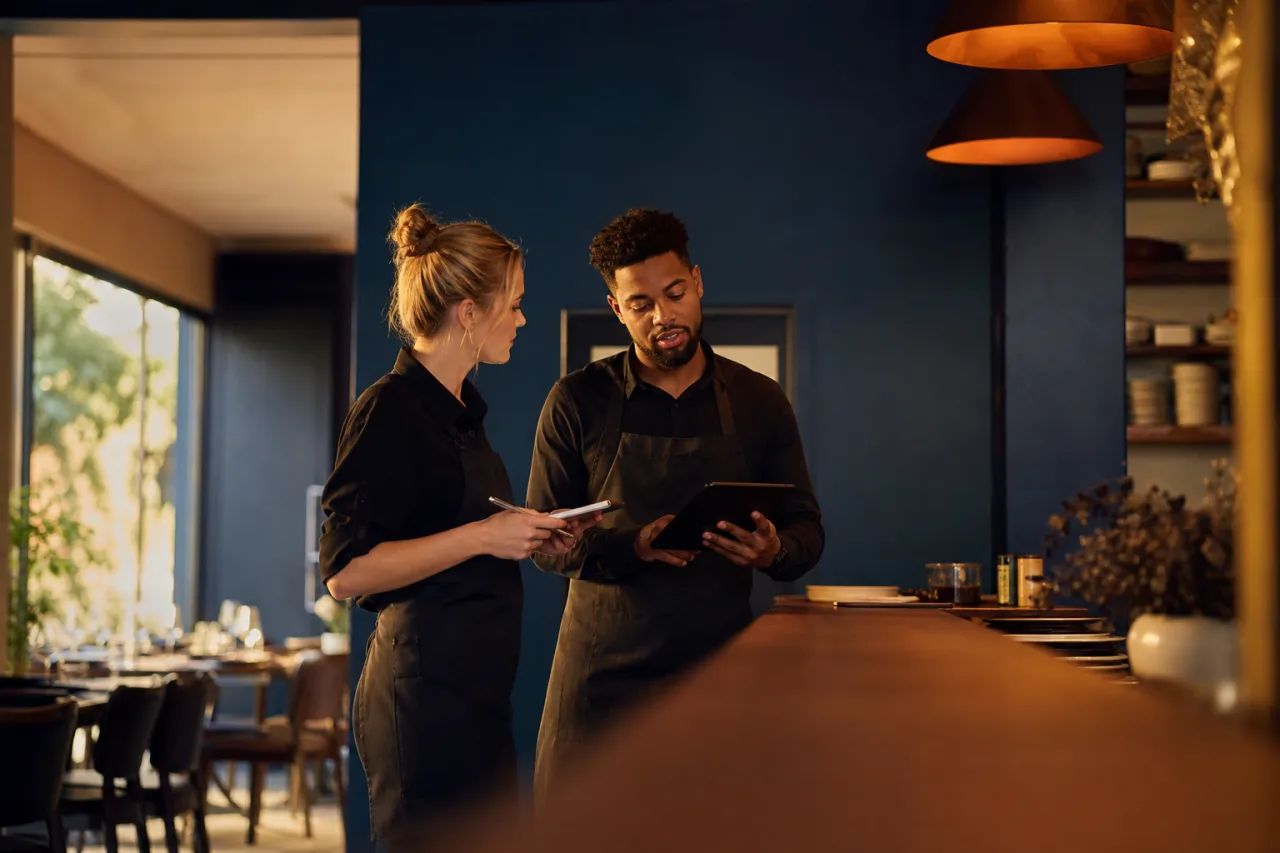
A strong restaurant shift communication routine is not about lengthy meetings. It is a practical safeguard for the moments when service changes hands. By reviewing reservations and table availability, sharing menu changes, recording open issues, assigning actions and confirming understanding, restaurants can reduce uncertainty between shifts.
Start with the same short structure each day, then adapt it to the reality of the service. Coordinate reservations, tasks and operational follow-up with connected Suite.coffee apps so that the next team has the information it needs in one clearer workflow. The goal is straightforward: every shift begins prepared to serve guests and complete the work that is already in motion.