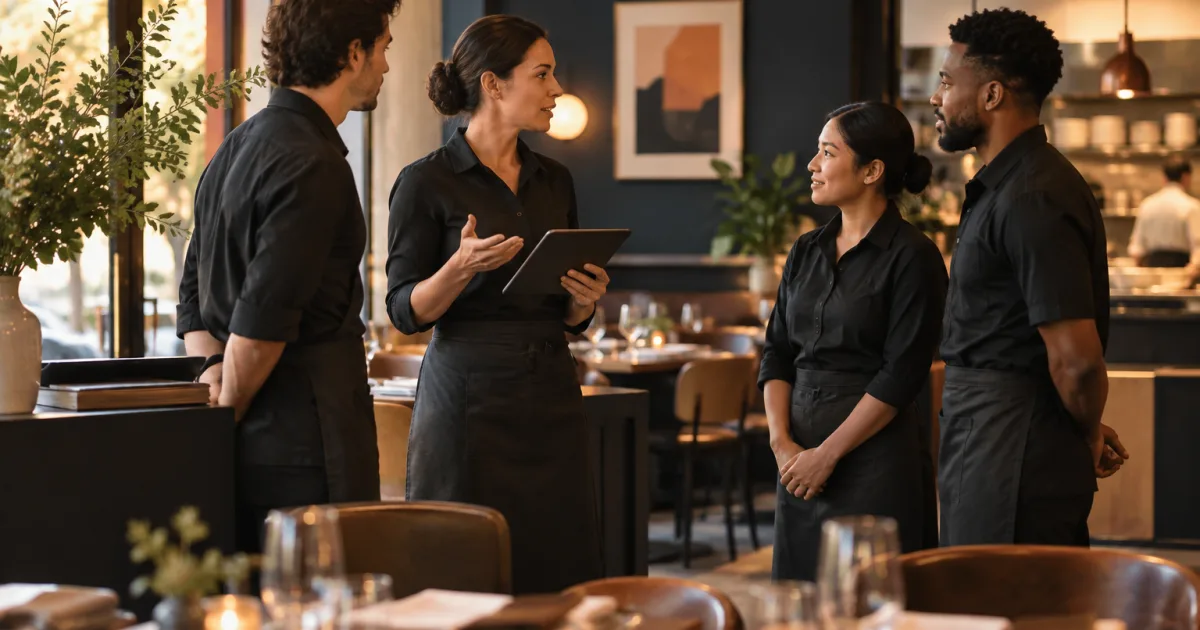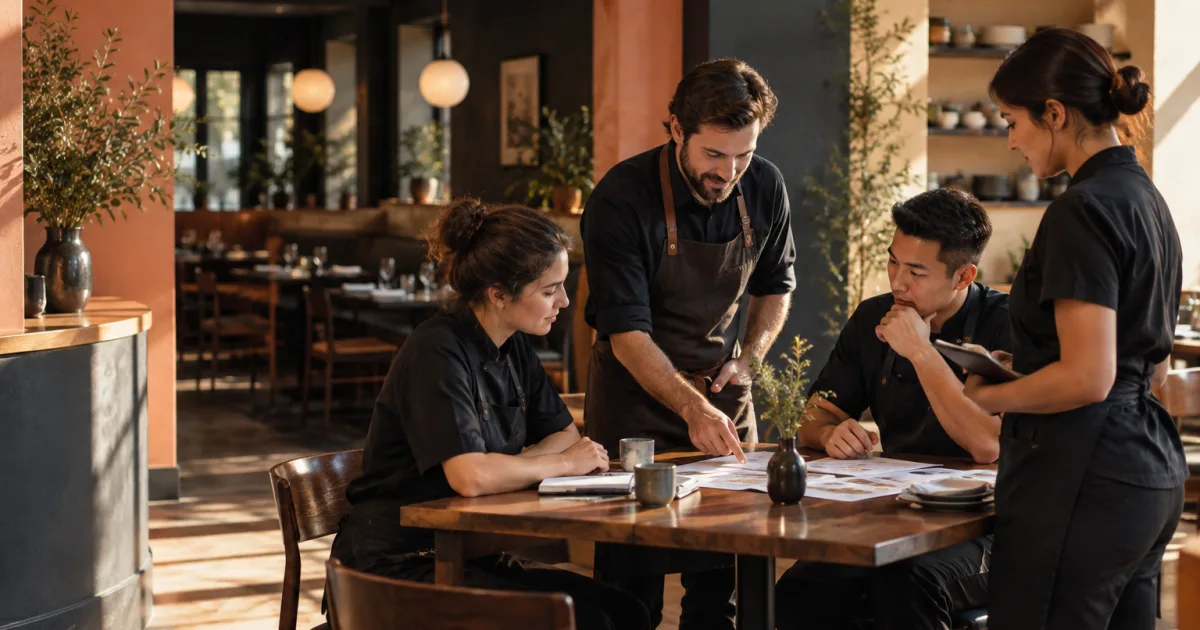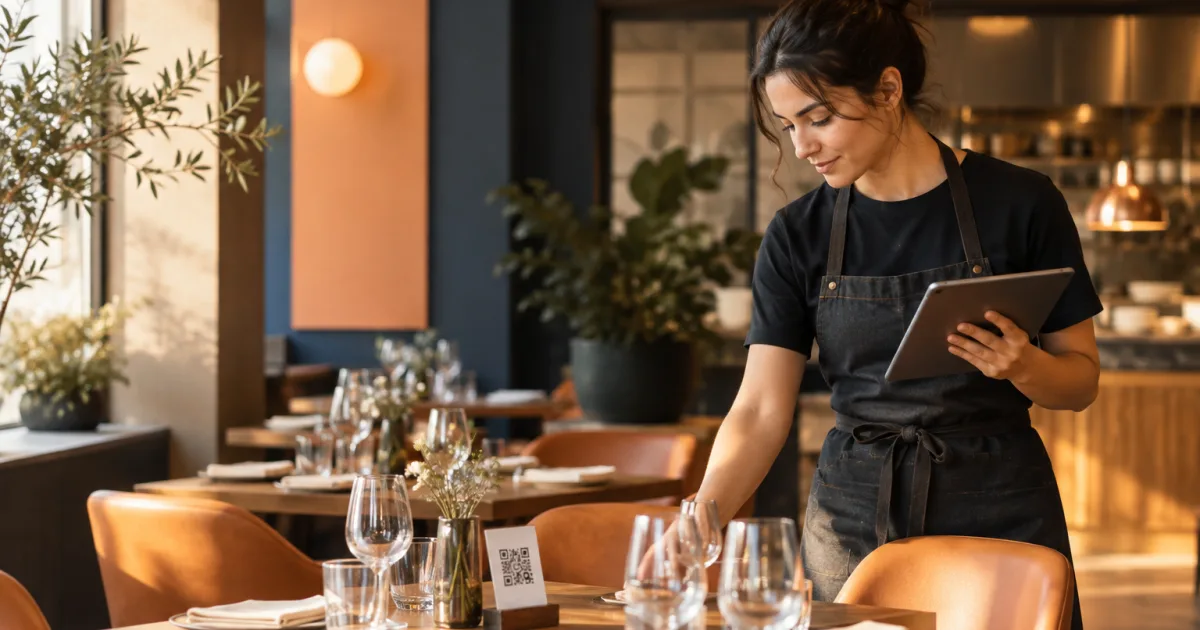








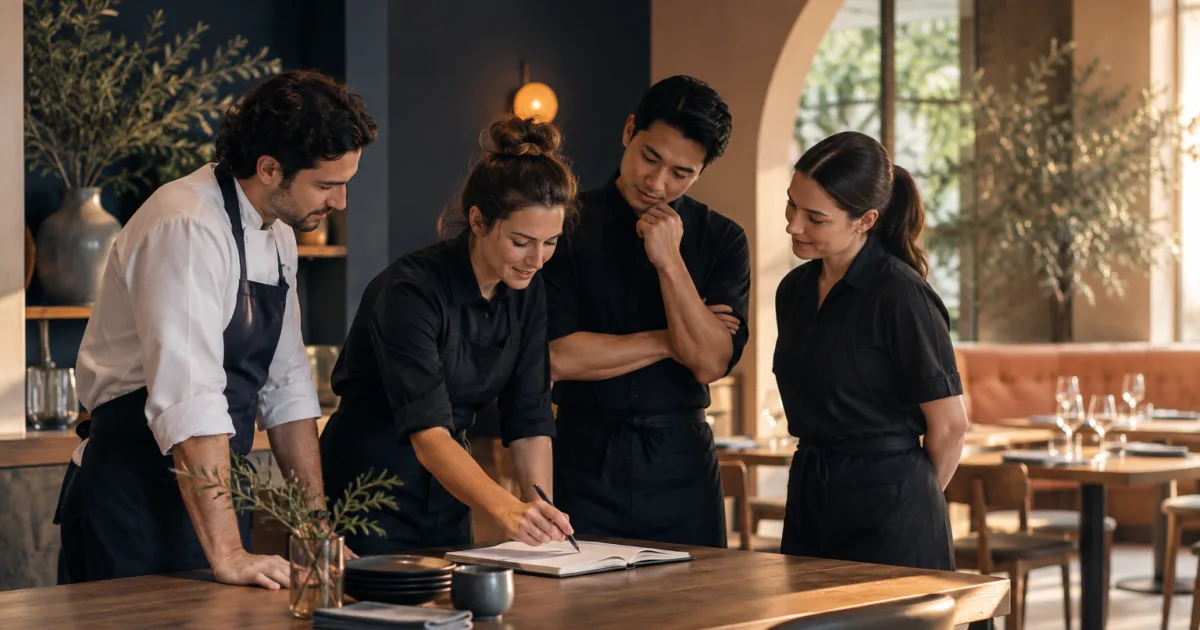
A reservation list is more than a record of who plans to dine. For a small restaurant team, it can also provide a useful starting point for deciding what to review before service: which service is coming up, which table areas are in use, what availability remains and whether the waiting list needs attention.
That does not mean every booking should trigger a separate task, or that a booking system can decide how your team works. A useful pre-shift routine is a short, deliberate review by the people responsible for the service. The aim is to spot relevant information early, agree what the team should know and avoid relying on scattered notes or last-minute verbal updates.
Why reservations are useful inputs to pre-service planning

During a busy shift, managers and front-of-house staff make decisions with limited time. Looking at the day’s reservations before service gives the team a shared picture of planned demand. It helps managers move from a general sense that the restaurant will be busy to a more practical discussion about the service ahead and the spaces that will be used.
Reservations are a planning input, not a complete forecast of everything that will happen. Guests may arrive at different times, plans can change and the team still needs to respond to the situation in front of them. Treat the booking view as a starting point for a conversation rather than a guarantee about how the shift will unfold.
That distinction keeps the routine grounded. You are not trying to predict every detail. You are checking what is currently booked, noting anything that deserves the team’s attention and making sure everyone knows how to share updates if circumstances change.
Review bookings by service and table area
Start by looking at the service you are preparing for. If the restaurant runs more than one service, separate the review so the team can focus on the bookings relevant to the upcoming period. This helps keep the discussion concise and makes it easier to notice where attention may be needed now, rather than mixing current plans with later bookings.
Next, review reservations in relation to your restaurant’s table areas. The useful question is not simply how many bookings appear on the screen, but how the reservations relate to the spaces your team uses. Are bookings spread across the areas you expect to use, or is there a reason to check one area’s plans more closely? The answer depends on your layout and service, so use the review to make a practical decision rather than applying a universal seating rule.
Keep the discussion focused on information that helps the team prepare. Confirm which service and table areas are relevant, and identify any booking details that staff should review before guests arrive. Avoid turning the conversation into a lengthy read-through of every reservation if there is no action for the team to take. A clear, shared overview is more useful than repeating information without context.
A restaurant reservation workspace can make this review easier by bringing bookings and table availability into one view. For example, Restaurant reservations supports organising services, tables and areas alongside bookings. The team can use that information as a basis for its own pre-service discussion; the people managing the shift still decide what needs attention and how to prepare.
Check availability and the waiting list before the shift
Once you have reviewed the upcoming service and table areas, check the availability that remains. This provides context for handling further booking enquiries and for understanding the current plan. Availability is useful only when it reflects the service and table arrangements your restaurant is actually using, so make sure the view you consult is the relevant one for the shift.
Then review the waiting list, if there is one. Consider it alongside existing bookings and availability, rather than as a separate list to revisit only when someone asks about a table. The point is to know that it exists and to have a shared approach for who will review it and communicate any updates. Do not promise a table simply because a name appears on a list; staff should consider the current availability and the restaurant’s own approach.
This step is especially helpful when booking enquiries continue close to service. A brief check lets the team begin from the same picture of confirmed bookings, available tables and waiting-list information. It can also prevent two people from making assumptions based on different notes or on a view they checked earlier.
Keep the process simple: check the right service, review the table availability, look at the waiting list and decide who is responsible for handling relevant enquiries or changes. The reservation information helps staff stay oriented, but the decision remains with the team managing the restaurant.
Agree who will review changes and communicate them
A pre-service review is more effective when the team knows who will keep an eye on booking changes and how important updates will be shared. In a small restaurant, one person may cover several responsibilities. Naming the person responsible for the reservation review can still reduce ambiguity, even if other staff help respond during service.
Agree on a straightforward communication routine that fits the way your team works. For example, decide who should tell the relevant front-of-house colleagues about a change that affects the upcoming service, and how the team will make sure the update is understood. The best method is the one staff can follow reliably; there is no need to add a complicated procedure to a small team’s shift.
It also helps to distinguish between information that is worth sharing and information that does not alter the team’s immediate preparation. A change that affects the service plan or table availability may need attention. A detail that has no bearing on the shift may not need to interrupt the briefing. Use judgement and keep communication clear, timely and relevant.
Most importantly, do not assume that reviewing the bookings once means they will remain unchanged. If the service plan changes, the person responsible should communicate the relevant update to the team. A clear owner for that review makes it easier to know where to direct a question and helps prevent important changes from staying in one person’s notes.
Use a short pre-service review to reduce last-minute confusion
For a small team, the review does not need to become a formal meeting. A few focused questions can guide it:
- Which service are we preparing for?
- Which table areas should we review in relation to the bookings?
- What availability remains, and what should we know about the waiting list?
- Who will review changes and share updates with the team?
- Is there anything the team needs to clarify before guests arrive?
These questions keep the conversation tied to practical preparation rather than a general discussion of the booking list. If there is nothing unusual to flag, the review can be brief. If something needs attention, the team has a moment to agree who will handle it before service becomes busy.
Keep the routine proportionate. A short review that staff can repeat is more useful than a detailed checklist that adds unnecessary work. Adapt the discussion to the restaurant’s layout, the service being prepared and the people on shift. The goal is not to create a perfect plan for every possible situation; it is to begin service with a shared understanding of the bookings, availability and communication responsibilities.
Make reservations part of a practical service routine

A restaurant reservation pre-service workflow connects the day’s bookings to decisions the team can actually use. Review reservations by service and table area, check availability and the waiting list, and agree who will follow changes and communicate relevant updates. Then keep the pre-shift discussion short enough to repeat consistently.
Reservations will not remove the need for judgement during service, but they can give the team a clearer starting point. To explore a simple way to organise restaurant bookings, table availability and waiting lists, take a look at Restaurant reservations.