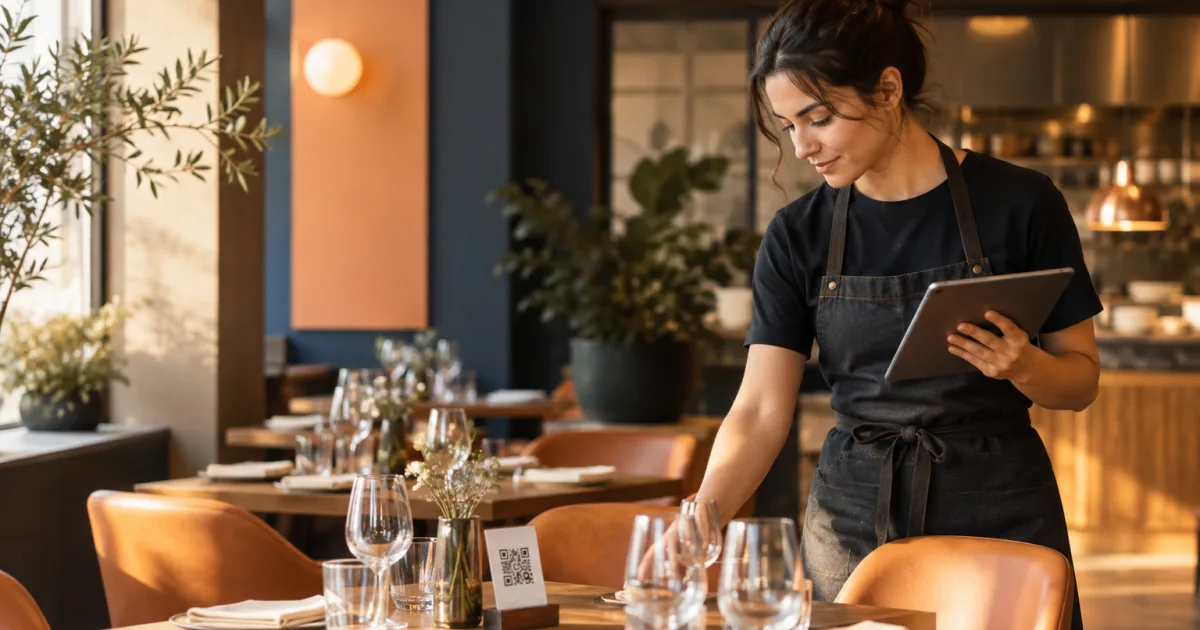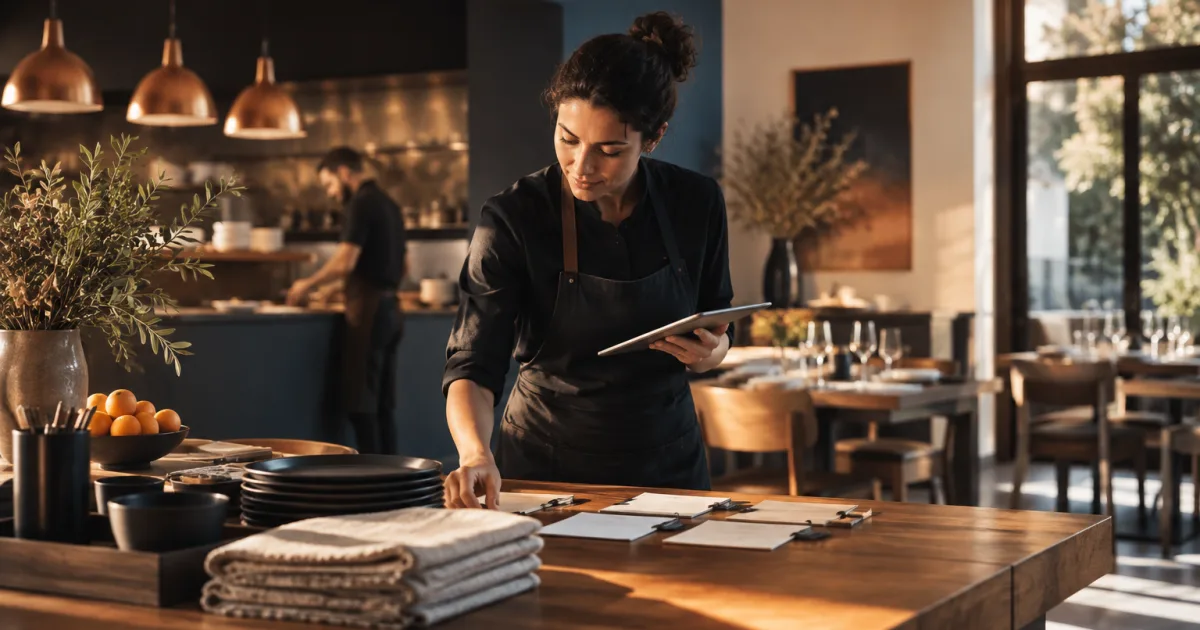









A reliable restaurant daily opening routine turns the first part of the day into a calm, shared preparation process. For an independent restaurant, the aim is simple: before guests arrive, the team should understand the day’s bookings, know which tables and areas are available, be working from accurate menu information, and be clear about who owns each preparation task.
Without a routine, important details can sit in separate places: a reservation note, a verbal update about a table, a changed dish price, or a task that everyone assumes someone else will complete. A short, repeatable pre-service process brings those details together early enough for the team to act on them.
The best routine is not the longest one. It is a practical sequence that is followed for every service period. Use the same order each day, record exceptions as they appear, and make the final check before opening part of the team’s normal rhythm.
What a daily opening routine should achieve

Opening restaurant operations are about readiness, not simply unlocking the door. At the end of the routine, the team should be able to answer a few basic questions with confidence:
- What service periods are ahead, and what bookings are expected?
- Which areas and tables can be offered to guests?
- What menu prices and dish availability should guests see?
- Who is responsible for each remaining preparation task?
- What issue needs attention before, during or after service?
These questions connect the parts of service preparation that guests notice most: a reservation handled smoothly, an appropriate table offered, and a menu that reflects what is actually available. They also give the team a common starting point, rather than asking each person to assemble the day’s picture alone.
A useful opening routine makes the current service visible before the service begins.
1. Review the day’s reservations and service periods
Start with the booking picture. Review the reservations for each upcoming service period and identify the practical details that affect how the room will run. This is the moment to see the day as a sequence of services rather than as isolated bookings.
Keep the review focused. Confirm the reservations that are already received, then look at availability for the service periods ahead. The purpose is not to create a complicated meeting; it is to give the person leading service and the wider team a shared view of expected demand.
Using a single booking view helps replace scattered calls and notes with a clearer starting point. Restaurant reservations is designed to manage restaurant bookings and table availability, receive online reservations, and organise services from one clear view. During an opening check, that can make it easier to move from “what is booked?” to “what do we need to prepare?”
Questions to ask during the booking review
- Which service periods need attention today?
- What reservations have been received for each service?
- Where is availability still open?
- What booking information needs to be shared with the team before guests arrive?
Do this review at a consistent time. When the routine happens at different moments each day, the team may be preparing from an incomplete view. A dependable time and a fixed order help make booking visibility a normal part of service preparation.
2. Check areas and table availability
Once the team understands the booking picture, check whether the physical layout matches it. Areas and tables are not just a list of furniture; they are the practical choices available when a reservation is organised or a guest arrives. Make sure the day’s table availability is understood alongside the reservations already received.
Start by reviewing the restaurant’s areas, then consider the tables within them. The objective is to ensure the service team is working from the same availability picture as the booking process. If an area or table requires attention, record it clearly rather than leaving it as a passing verbal note.
This step is particularly valuable because it joins two decisions that are often separated: accepting or organising bookings and preparing the room. The booking review tells you what is expected; the area and table check tells you what can be offered. Together, they give service a more reliable foundation.
For a consistent view of bookings, table availability, areas and waiting-list organisation, return to the restaurant reservations workspace. The practical benefit is clarity: the team can organise services from a view designed around restaurant reservations and tables instead of relying on disconnected information.
3. Confirm menu prices and availability
A guest’s menu should match the current reality of the restaurant. Before service, review the dishes, prices and availability that will be presented. This is a simple but important part of a restaurant pre service checklist: it prevents the team from beginning service with one understanding while guests see another.
Keep the check current and specific. If a dish is available, ensure it is shown that way. If a price has changed, ensure the displayed price reflects it. The goal is not to add an extra administrative task; it is to make menu accuracy part of the same opening rhythm as bookings and tables.
A digital menu can make this check more direct because it can be updated without reprinting menus. QR Menu lets restaurants and cafés publish a digital menu behind a QR code, change dishes, prices and availability instantly, and provide a mobile experience without asking customers to install anything.
Keep the menu check connected to service
Do not treat menu accuracy as a separate task that happens only when something changes. Include it in every opening routine, even if the answer is simply that no update is needed. That habit gives the team a clear point to confirm what guests will see before the first order is taken.
When the menu, table availability and reservation view are checked in the same preparation window, the service team has a more complete picture. They know what is expected, where guests can be seated, and what information should be communicated through the menu.
4. Assign preparation responsibilities
A list of opening tasks only works when responsibility is visible. After reviewing bookings, areas, tables and menu details, turn the remaining preparation into clear assignments. Each task should have an owner and a status: not started, in progress, or complete. This avoids the common problem of a task being discussed but not actually done.
Keep assignments practical. A person does not need a long explanation if the task is stated clearly and placed in the regular routine. The key is that everyone can see what needs doing and what has been completed before service starts.
Checklist supports recurring checklists, clear repeatable tasks, responsibility assignment and completion visibility. It can help make a daily opening sequence easier to follow, especially when the same checks need to happen across service periods.
- List the recurring checks in the order they should be completed.
- Assign responsibility for each preparation item.
- Review what is complete before guests arrive.
- Carry unfinished or exceptional items into the issue record rather than losing them in conversation.
Build the routine around the work your team genuinely repeats. A useful checklist is specific enough to guide action and short enough to be used. Add only items that support the readiness questions at the start of this article.
5. Record issues before guests arrive
Every opening can reveal an exception: something that needs attention, a detail that requires follow-up, or a change the next service should know about. Record these issues before guests arrive. A written record is more dependable than relying on memory once service is underway.
Keep the note factual and useful. State what was found, what action is needed, who is responsible if that is known, and whether the issue affects the current service. This creates a clear handover point between preparation and active service.
Issue recording also protects the routine from becoming a box-ticking exercise. If a check uncovers something important, the team has a place to capture it and a reason to revisit it. The result is not perfection; it is better visibility and more deliberate follow-through.
Make the routine repeatable
Consistency is what turns individual opening actions into restaurant operations. Use the same sequence for every service: reservations first, areas and tables next, menu accuracy, task assignments, then issues. The order matters because each step informs the next one.
Keep the routine visible to the people who need it. Review it regularly based on the work the team actually performs, but avoid changing it casually from day to day. A stable process helps new and experienced team members understand what “ready for service” means in practical terms.
Most importantly, finish with a brief confirmation. Before guests arrive, ask whether bookings are understood, table availability is clear, the menu is current, responsibilities are assigned and issues are recorded. If the answer is yes, the restaurant is prepared to begin service with a shared view of the day.
Conclusion: start service from one clear picture

A daily opening routine does not need to be complicated to be effective. By reviewing reservations, checking table areas, confirming menu details, assigning work and recording issues, an independent restaurant can make pre-service preparation more repeatable and easier to follow.
Turn your pre-service checks into a routine the team can follow. Start with the sequence above, then use clear booking, menu and checklist tools to keep the important details visible before every service.